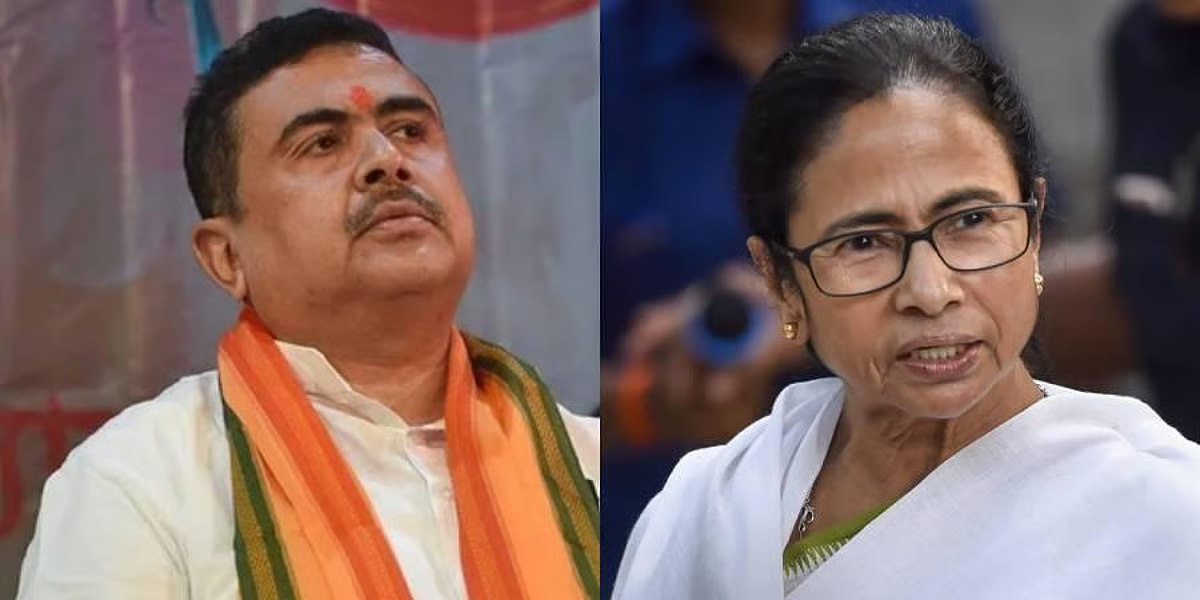
The 2026 West Bengal Legislative Assembly election is shaping up to be one of the most closely watched political events in India this year. With the Election Commission of India announcing the official election schedule, political parties across the state have begun preparing for a high-stakes contest that will determine the future government of West Bengal for the next five years.
The elections will decide all 294 seats of the West Bengal Legislative Assembly. Voting will take place in two phases, while the counting of votes and announcement of results will take place in early May.
Political analysts believe the election will be a major contest between the ruling All India Trinamool Congress and the Bharatiya Janata Party, with other parties also attempting to gain ground in the state.
West Bengal Election 2026: Full Schedule
According to the Election Commission of India, the assembly election will be held in two phases.
Phase-wise Voting Dates
Phase 1 Voting:
23 April 2026
Phase 2 Voting:
29 April 2026
Vote Counting and Result Date:
4 May 2026
The election will cover all 294 assembly constituencies, and the party or alliance that wins at least 148 seats will secure a majority and form the next government.
Why the West Bengal Election Is So Important
West Bengal is one of India’s most politically significant states.
With a population of more than 100 million people and a strong political culture, elections in the state often attract national attention.
The 2026 election is particularly important because:
The current assembly term ends in May 2026.
It will decide the state government for the next five years.
It is seen as a major political test for both regional and national parties.
Many political observers believe the results could influence political strategies ahead of future national elections.
Major Political Parties in the West Bengal Election
Several major political parties are expected to contest the 2026 assembly election.
Trinamool Congress (TMC)
The ruling party in the state is the All India Trinamool Congress, led by Mamata Banerjee.
The party won a decisive victory in the 2021 West Bengal Assembly election, securing more than 200 seats.
TMC is now aiming to retain power and secure another term in government.
Bharatiya Janata Party (BJP)
The Bharatiya Janata Party is the primary opposition party in the state.
The BJP emerged as the main challenger to the ruling party in the previous election and is hoping to expand its support base across Bengal.
The party has already started major campaign efforts, promising economic development and welfare schemes for voters.
Indian National Congress
The Indian National Congress has announced plans to contest the election independently across the state.
This decision could reshape the political dynamics of the election and potentially split opposition votes.
Left Front
The Communist Party of India (Marxist) and its allies, traditionally strong in West Bengal politics, are also preparing for the election.
The Left Front ruled the state for over three decades before losing power in 2011.
Number of Voters and Polling Stations
The West Bengal election is one of the largest democratic exercises in India.
According to official data:
More than 70 million voters are eligible to vote.
Over 80,000 polling stations will be set up across the state.
These polling stations will be monitored by election officials to ensure smooth and fair voting.
Election Commission Preparations
To ensure free and fair elections, the Election Commission of India has implemented several measures.
These include:
Deployment of additional election observers
Monitoring campaign spending
Strict enforcement of the Model Code of Conduct
Increased security arrangements
The commission has also increased the number of observers to monitor election activities and prevent irregularities.
Security Arrangements for the Election
West Bengal elections have historically required extensive security arrangements.
To maintain law and order during the election period:
Thousands of security personnel will be deployed.
Central armed police forces may assist state police.
Sensitive polling stations will receive additional protection.
Authorities aim to ensure that voters can cast their ballots peacefully and safely.
Key Issues Likely to Dominate the Election Campaign
Several major issues are expected to dominate political debates during the election campaign.
Employment
Youth unemployment remains a major issue in many parts of the state.
Political parties are likely to promise job creation and economic opportunities.
Infrastructure Development
Infrastructure projects such as roads, railways, and urban development are key campaign topics.
Political leaders often highlight development initiatives during election campaigns.
Welfare Schemes
Welfare programs aimed at women, farmers, and low-income families will also play an important role in the election.
Different parties are expected to announce new schemes to attract voters.
Industrial Growth
Investment and industrial development have become key political topics.
Political parties are likely to promise policies that encourage businesses and create jobs.
Key Constituencies to Watch
Some constituencies in the state are expected to attract significant attention during the election.
These seats often become major political battlegrounds because of:
High-profile candidates
Close contests in previous elections
Strategic importance for political parties
Several constituencies in Kolkata and surrounding districts are expected to play a major role in determining the final outcome.
Campaign Strategies of Political Parties
Political parties have already begun preparing for the election campaign.
Common campaign strategies include:
Public rallies and political roadshows
Social media outreach
Door-to-door campaigns
Public welfare announcements
Political leaders will travel extensively across the state to connect with voters.
Role of Social Media in the Election
Social media is expected to play a major role in the 2026 election campaign.
Political parties are using digital platforms to:
Share campaign messages
Engage with young voters
Promote political speeches and rallies
Online campaigns have become an important tool in modern elections.
Voter Turnout Expectations
West Bengal is known for high voter turnout during elections.
In previous elections, voter participation often exceeded 80 percent.
This strong voter engagement reflects the state’s deep political awareness and active democratic culture.
Experts expect another high turnout in the 2026 election.
What Happens on Counting Day?
After voting concludes, the counting of votes will take place on 4 May 2026.
Electronic Voting Machines (EVMs) will be opened at designated counting centers.
Election officials will then announce results constituency by constituency until the final seat tally is completed.
The party or alliance that wins 148 or more seats will form the next state government.
Possible Political Scenarios
Several possible outcomes could emerge from the election.
Scenario 1: TMC Retains Power
If the ruling party wins another majority, Mamata Banerjee could continue as Chief Minister.
Scenario 2: BJP Forms Government
If the BJP secures a majority or forms a coalition, it could form the state government.
Scenario 3: Hung Assembly
A closely contested election could produce a hung assembly where no party wins a clear majority.
In such a scenario, alliances between parties may decide the final government.
Why This Election Matters for National Politics
The West Bengal election is important not only for the state but also for national politics.
West Bengal has 42 seats in the Lok Sabha, making it a key state in national elections.
Political analysts believe the results of the assembly election could influence national political strategies in the coming years.
Conclusion
The announcement of the West Bengal Assembly Election 2026 schedule has officially started the political battle in the state.
With voting scheduled for April 23 and April 29 and results to be declared on May 4, political parties are now preparing for an intense campaign across the state.
As millions of voters prepare to participate in this democratic exercise, the upcoming election will determine the political future of West Bengal and shape the state’s governance for the next five years.
The next few months will witness intense campaigning, political debates, and strategic alliances as parties compete to win the support of voters across Bengal.