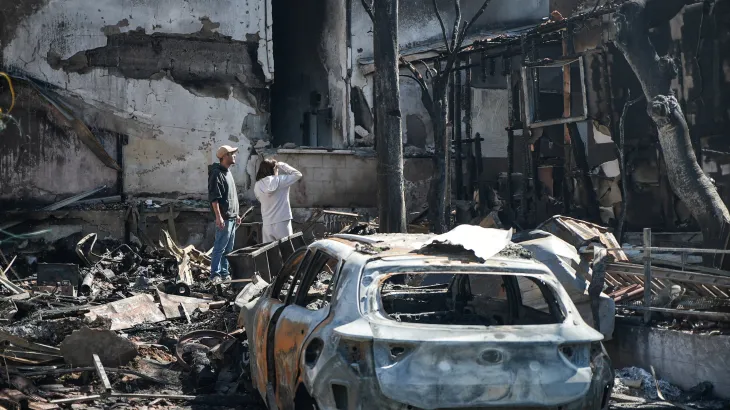
The ongoing Iran–Israel conflict has entered a dangerous new phase as Iran mourns the loss of its top leadership figures while retaliatory strikes continue across the region.
In one of the most dramatic escalations in recent history, Tehran witnessed massive mourning ceremonies following the deaths of senior officials, including Ali Larijani and Gholamreza Soleimani, both reportedly killed in Israeli airstrikes.
At the same time, Iran’s retaliation has led to casualties in Israel, with at least two civilians killed in missile attacks, signaling that the conflict is far from over.
Tehran in Mourning: A Nation Grieves Its Leaders
The capital city of Tehran has turned into a center of mourning as thousands gathered to pay tribute to the slain leaders.
State funerals and public processions saw:
Massive crowds dressed in black
Anti-Israel and anti-US slogans
Emotional scenes of grief and anger
The deaths of Larijani and Soleimani are being described as one of the biggest blows to Iran’s leadership in recent times.
According to reports, Ali Larijani was among the most powerful figures in Iran, especially after earlier leadership losses during the conflict.
Who Was Ali Larijani?
Ali Larijani was a key political and security figure in Iran.
His roles included:
Former Speaker of Parliament
Chief of Supreme National Security Council
Senior strategist in nuclear negotiations
He was widely considered a central figure in Iran’s political structure and decision-making process.
His death marks a major shift in Iran’s internal power dynamics.
Gholamreza Soleimani: Commander of Basij Force
Another major loss for Iran is Gholamreza Soleimani, who led the Basij paramilitary force.
The Basij is known for:
Internal security operations
Controlling protests
Supporting military campaigns
Soleimani’s killing is seen as a significant hit to Iran’s internal security apparatus.
Israeli Airstrikes: Targeted Leadership Attacks
The deaths occurred during a series of Israeli airstrikes targeting key locations in Iran.
According to reports:
Multiple high-value targets were hit
Intelligence-led operations were used
Senior officials were specifically targeted
These strikes highlight Israel’s capability to carry out deep and precise operations inside Iran.
Some reports initially suggested uncertainty over Larijani’s fate, but later confirmations indicate he was killed in the strike.
Iran Retaliates: Missile Strikes on Israel
Following the attacks, Iran launched a series of missile strikes targeting Israeli cities.
These retaliatory strikes resulted in:
At least two civilian deaths in Israel
Damage to infrastructure
Panic among residents
The attacks were described as part of Iran’s “decisive response” to the assassination of its leaders.
Rising Death Toll and Regional Impact
The conflict has already caused significant casualties:
Thousands killed across Iran and neighboring regions
Civilian deaths in Israel
Widespread destruction
The war is no longer limited to two countries and is affecting the entire Middle East.
Global Reactions to the Escalation
The international community has expressed deep concern over the situation.
Key reactions include:
Calls for ceasefire
Diplomatic efforts to reduce tensions
Warnings about regional instability
Global powers fear that the conflict could turn into a wider war involving multiple nations.
Strategic Importance: Strait of Hormuz at Risk
One of the biggest concerns is the potential impact on the Strait of Hormuz.
Reports suggest:
Iran may restrict access
Oil shipments could be disrupted
Global fuel prices may rise
This adds an economic dimension to the conflict, affecting countries worldwide.
Why This Conflict Matters Globally
The Iran–Israel war is not just a regional issue.
Its impact includes:
Global oil market instability
Increased geopolitical tensions
Risk of wider war
The involvement of major powers makes the situation even more critical.
Humanitarian Concerns
The war has also triggered a humanitarian crisis.
Key issues:
Displacement of civilians
Damage to infrastructure
Shortage of essential supplies
International organizations have raised concerns about the growing human cost of the conflict.
Social Media and Public Reaction
The conflict has dominated global discussions online.
Trending topics include:
#IranWar
#IsraelAttack
#TehranMourning
People around the world are sharing opinions, updates, and reactions.
Military Strategies and Escalation
Experts believe the current phase of the war shows:
Increased use of targeted assassinations
Advanced missile systems
Strategic retaliation
Both sides appear to be escalating rather than de-escalating.
What Happens Next?
The future of the conflict remains uncertain.
Possible scenarios include:
Further escalation
International intervention
Temporary ceasefire
However, current developments suggest that tensions are likely to continue.
Conclusion
The latest developments in the Iran–Israel conflict highlight the seriousness of the situation.
With Tehran mourning the deaths of Ali Larijani and Gholamreza Soleimani, and civilians killed in Israel, the conflict has reached a critical point.
As the war continues, the world watches closely, hoping for a resolution while preparing for the possibility of further escalation.