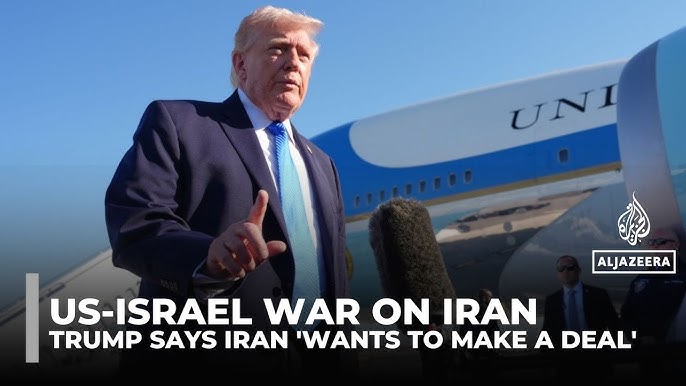
The ongoing conflict between Iran and Israel has entered a critical phase, with fresh missile attacks, rising geopolitical tensions, and conflicting statements from global leaders.
In the latest development, former U.S. President Donald Trump has claimed that Iran is willing to negotiate and “wants to make a deal” to end the war. However, Iranian officials have strongly denied these claims, calling them “fake news” and insisting that no talks are taking place.
This contradiction has added another layer of uncertainty to an already volatile situation, impacting global markets, oil prices, and diplomatic relations.
In this detailed news blog, we break down the latest LIVE updates on the Iran-Israel war, Trump’s statements, Iran’s response, global reactions, and what it all means for the future.
📢 Breaking News: Trump Claims Iran Wants a Deal
In a major statement, Donald Trump said that Iran is eager to negotiate and reach an agreement to end the ongoing conflict.
According to Trump:
- Iran “wants to make a deal badly”
- Talks are “productive”
- Progress is being made through intermediaries
He also announced a temporary pause on potential U.S. strikes, suggesting that diplomatic efforts are underway.
However, this claim has immediately been challenged by Iran.
❗ Iran Denies Any Negotiations
Officials from Iran have categorically denied Trump’s claims.
Key responses from Iran:
- No direct or indirect talks with the U.S.
- Claims of negotiations labeled as “fake news”
- Accusation that statements are meant to influence markets
Iran’s leadership has made it clear that no formal discussions are currently happening, contradicting Trump’s narrative.
🚀 Escalation Continues Despite Diplomatic Claims
While talks remain uncertain, the conflict on the ground continues to intensify.
⚔️ Recent Developments:
- Iran launched multiple missile attacks on Israeli regions
- Damage reported in northern areas
- Continued military exchanges between both nations
Despite Trump’s optimism about negotiations, active military conflict is ongoing, indicating no immediate de-escalation.
🌍 Indirect Talks Through Mediators
Even though Iran denies direct talks, reports suggest that indirect communication channels may still be active.
🌐 Possible Mediators:
- Egypt
- Pakistan
- Oman
- Gulf countries
These nations are reportedly acting as intermediaries to reduce tensions and explore diplomatic solutions.
However, no official confirmation of successful negotiations has been made.
📉 Impact on Global Markets
Trump’s statement about a possible deal initially had a strong impact on global markets.
📊 Market Reactions:
- Oil prices dropped below $100 per barrel
- Stock markets showed temporary gains
However, after Iran denied negotiations and violence escalated again:
- Oil prices surged back up
- Market uncertainty increased
This highlights how sensitive global markets are to geopolitical developments.
⚡ Why This Conflict Matters Globally
The Iran-Israel war is not just a regional conflict—it has global implications.
🌍 Key Concerns:
- Disruption of oil supply routes
- Rising fuel prices worldwide
- Impact on global trade
- Risk of wider Middle East conflict
The Strait of Hormuz, a crucial oil shipping route, remains a major point of tension.
🛢️ The Strait of Hormuz Crisis
One of the biggest concerns in the conflict is control over the Strait of Hormuz.
📌 Why It Matters:
- Handles a significant portion of global oil supply
- Any disruption can spike oil prices globally
Trump has warned Iran to allow free passage, while Iran has threatened retaliation if attacked.
🏛️ Political Reactions Worldwide
The situation has triggered strong reactions from global leaders.
🇺🇸 United States:
- Push for diplomatic resolution
- Military pressure remains an option
🇪🇺 European Union:
- Calls for immediate ceasefire
- Concern over economic impact
🌏 Other Nations:
- Urging restraint
- Supporting mediation efforts
The international community is closely monitoring developments.
📊 Conflicting Narratives: Who is Right?
The biggest question remains—are talks actually happening?
🟢 Trump’s Position:
- Talks are ongoing
- Deal possible soon
🔴 Iran’s Position:
- No talks at all
- Claims are false
This contradiction creates confusion and uncertainty in global diplomacy.
🧠 Expert Analysis
Experts believe the truth may lie somewhere in between.
📌 Observations:
- Indirect talks may be happening
- No formal agreement yet
- Both sides using strategic communication
Diplomatic messaging often plays a role in shaping public perception.
📈 Impact on Oil Prices
Oil markets are highly sensitive to Middle East tensions.
📊 Current Trends:
- Prices fluctuating rapidly
- Spike after renewed conflict
- Investors reacting to news headlines
The situation could lead to long-term energy instability.
⚠️ Risks of Further Escalation
The conflict carries serious risks.
🚨 Possible Scenarios:
- Wider regional war
- Involvement of more countries
- Increased military action
The situation remains highly unpredictable.
🔮 Future Outlook
The future of the Iran-Israel conflict depends on several factors:
🔍 Key Variables:
- Success of diplomatic efforts
- Military strategies of both sides
- Global intervention
Short-term volatility is expected, with no clear resolution yet.
🧾 Timeline of Recent Events
📅 Key Events:
- Missile exchanges between Iran and Israel
- Trump claims negotiation progress
- Iran denies any talks
- Markets react sharply
- Conflict continues
This timeline shows how rapidly the situation is evolving.
🌐 Role of Media and Information
Media coverage plays a major role in shaping public perception.
📢 Key Points:
- Conflicting reports create confusion
- Statements influence markets
- Information warfare is part of modern conflicts
Accurate reporting is crucial in such situations.
🧠 What This Means for the World
The conflict highlights:
- Fragility of global peace
- Importance of diplomacy
- Economic interconnectedness
Even regional conflicts can have worldwide consequences.
🏁 Final Verdict
The ongoing war between Iran and Israel has reached a critical juncture, with conflicting narratives adding to the complexity.
While Donald Trump claims that Iran is ready to negotiate, Tehran has firmly denied any such talks, calling them false. Meanwhile, missile exchanges continue, and the risk of further escalation remains high.
At this stage, the situation remains uncertain, with diplomacy and military action unfolding simultaneously. The coming days will be crucial in determining whether the conflict moves toward resolution or further intensification.