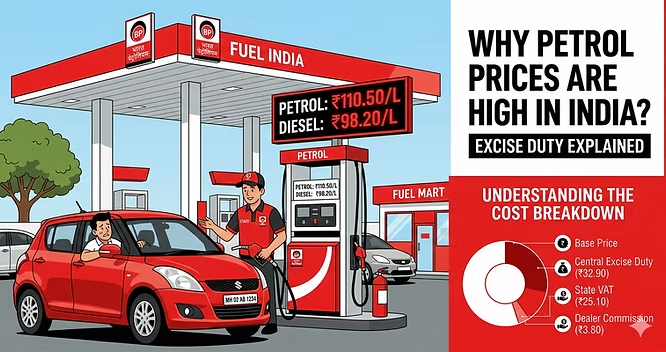
Fuel prices in India continue to be one of the most closely monitored economic indicators, directly impacting the daily lives of millions. The petrol and diesel price today is not just a number—it reflects global oil trends, government policies, taxation structures, and economic conditions. Among the most crucial components influencing fuel prices is the excise duty levied by the central government.
In 2026, as inflation concerns, global crude oil volatility, and domestic economic factors shape fuel pricing, understanding the role of excise duty becomes essential for consumers, businesses, and policymakers alike.
This detailed news-style blog explains today’s petrol and diesel prices, excise duty structure, recent changes, impact on consumers, and future outlook.
📢 Petrol Diesel Price Today in India
As of the latest update, fuel prices across major cities in India remain relatively stable, although minor fluctuations are observed based on global trends.
📊 Approximate Fuel Prices:
- Petrol: ₹100 to ₹110 per litre
- Diesel: ₹88 to ₹98 per litre
Prices vary depending on location due to state taxes, transportation costs, and local levies.
🏙️ City-Wise Petrol and Diesel Prices
Fuel prices differ slightly across cities:
📍 Major Cities:
- Delhi: Petrol around ₹96–₹100, Diesel ₹89–₹92
- Mumbai: Petrol ₹105–₹110, Diesel ₹94–₹98
- Bengaluru: Petrol ₹101–₹106, Diesel ₹89–₹94
- Chennai: Petrol ₹102–₹107, Diesel ₹94–₹98
These variations are primarily due to state VAT (Value Added Tax) and other local charges.
🧾 What is Excise Duty on Petrol and Diesel?
Excise duty is a tax imposed by the central government on the production or sale of goods, including fuel.
In India, excise duty on petrol and diesel is a fixed amount per litre, unlike VAT which is percentage-based.
📌 Key Points:
- Levied by the central government
- Included in the final retail price
- One of the largest contributors to fuel pricing
Excise duty plays a major role in determining the final price consumers pay at fuel stations.
📊 Current Excise Duty Structure (2026)
As of 2026, the approximate excise duty rates are:
- Petrol: ₹19–₹20 per litre
- Diesel: ₹15–₹16 per litre
These rates have been revised multiple times over the years depending on economic conditions and government policies.
📉 Recent Changes in Excise Duty
In recent years, the government has adjusted excise duty several times to manage inflation and fuel prices.
📌 Key Trends:
- Reduction during high inflation periods
- Increase when global crude prices fall
- Strategic adjustments to balance revenue and consumer relief
Such changes directly impact fuel prices and consumer spending.
🌍 Global Factors Affecting Fuel Prices
Fuel prices in India are heavily influenced by global factors, including:
🌐 Key Influences:
- Crude oil prices in international markets
- Exchange rate (₹ vs USD)
- OPEC production decisions
- Geopolitical tensions
India imports a significant portion of its crude oil, making it sensitive to global market fluctuations.
💰 Breakdown of Petrol and Diesel Price
Understanding the price structure helps explain why fuel prices are high.
📊 Components of Fuel Price:
- Base price (refinery cost)
- Freight charges
- Excise duty (central government)
- VAT (state government)
- Dealer commission
Excise duty and VAT together make up a significant portion of the final price.
📈 Impact of Excise Duty on Consumers
Excise duty directly affects consumers by increasing fuel prices.
🚗 Key Impacts:
- Higher transportation costs
- Increased cost of goods and services
- Inflationary pressure
Fuel price hikes often lead to a ripple effect across the economy.
🏢 Government Revenue from Excise Duty
Excise duty on fuel is a major source of revenue for the government.
📊 Importance:
- Funds infrastructure projects
- Supports welfare schemes
- Helps manage fiscal deficit
While reducing excise duty can provide relief to consumers, it also affects government revenue.
⚖️ Petrol vs Diesel Pricing
Petrol and diesel are taxed differently.
📌 Differences:
- Petrol generally has higher excise duty
- Diesel is widely used in transportation and agriculture
- Price changes impact different sectors differently
Diesel price increases often have a broader economic impact.
📉 Why Fuel Prices Remain High
Despite fluctuations in global crude prices, fuel prices in India often remain high due to:
- High taxation (excise + VAT)
- Currency depreciation
- Rising demand
This has been a topic of debate among policymakers and consumers.
🧠 Expert Analysis
Economists believe that fuel pricing is a complex balance between:
- Government revenue needs
- Inflation control
- Global market conditions
Reducing excise duty can provide short-term relief but may impact long-term fiscal stability.
📊 Fuel Price Trends in 2026
So far in 2026, fuel prices have shown:
- Relative stability
- Minor fluctuations
- Sensitivity to global oil prices
The government has maintained a cautious approach in adjusting excise duty.
🌱 Impact on Economy and Inflation
Fuel prices play a critical role in shaping inflation.
📌 Effects:
- Higher fuel prices increase logistics costs
- Leads to rise in prices of goods
- Impacts household budgets
Controlling fuel prices is essential for economic stability.
🔮 Future Outlook for Fuel Prices
The future of petrol and diesel prices depends on:
- Global crude oil trends
- Government taxation policies
- Economic conditions
Experts expect moderate fluctuations rather than drastic changes.
⚠️ Challenges Ahead
India faces several challenges in managing fuel prices:
- Dependence on oil imports
- Balancing revenue and consumer relief
- Transition to renewable energy
Addressing these challenges will be crucial for long-term stability.
🏁 Final Verdict
The petrol and diesel price today in India reflects a complex interplay of global factors, government policies, and taxation structures. Excise duty remains a key component influencing fuel prices, directly impacting consumers and the economy.
While the government continues to balance revenue needs with consumer relief, fuel prices are expected to remain sensitive to global developments. For consumers, staying informed about price trends and policy changes is essential.
As India moves towards a more sustainable energy future, fuel pricing dynamics may evolve, but for now, petrol and diesel continue to play a vital role in the country’s economy.